
Keen Ears, Swift Feet — A Symbol of Victory and Good Fortune.
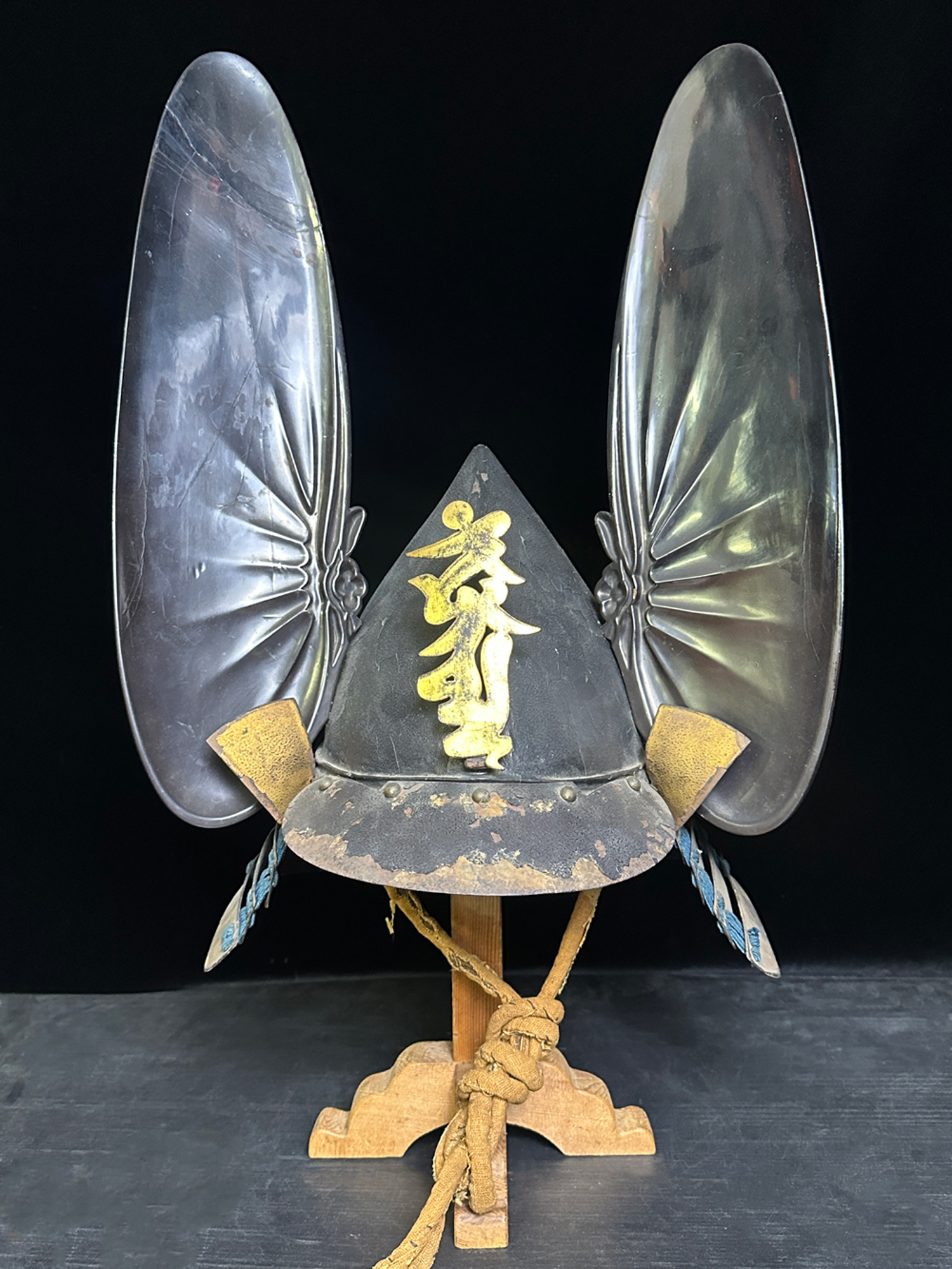
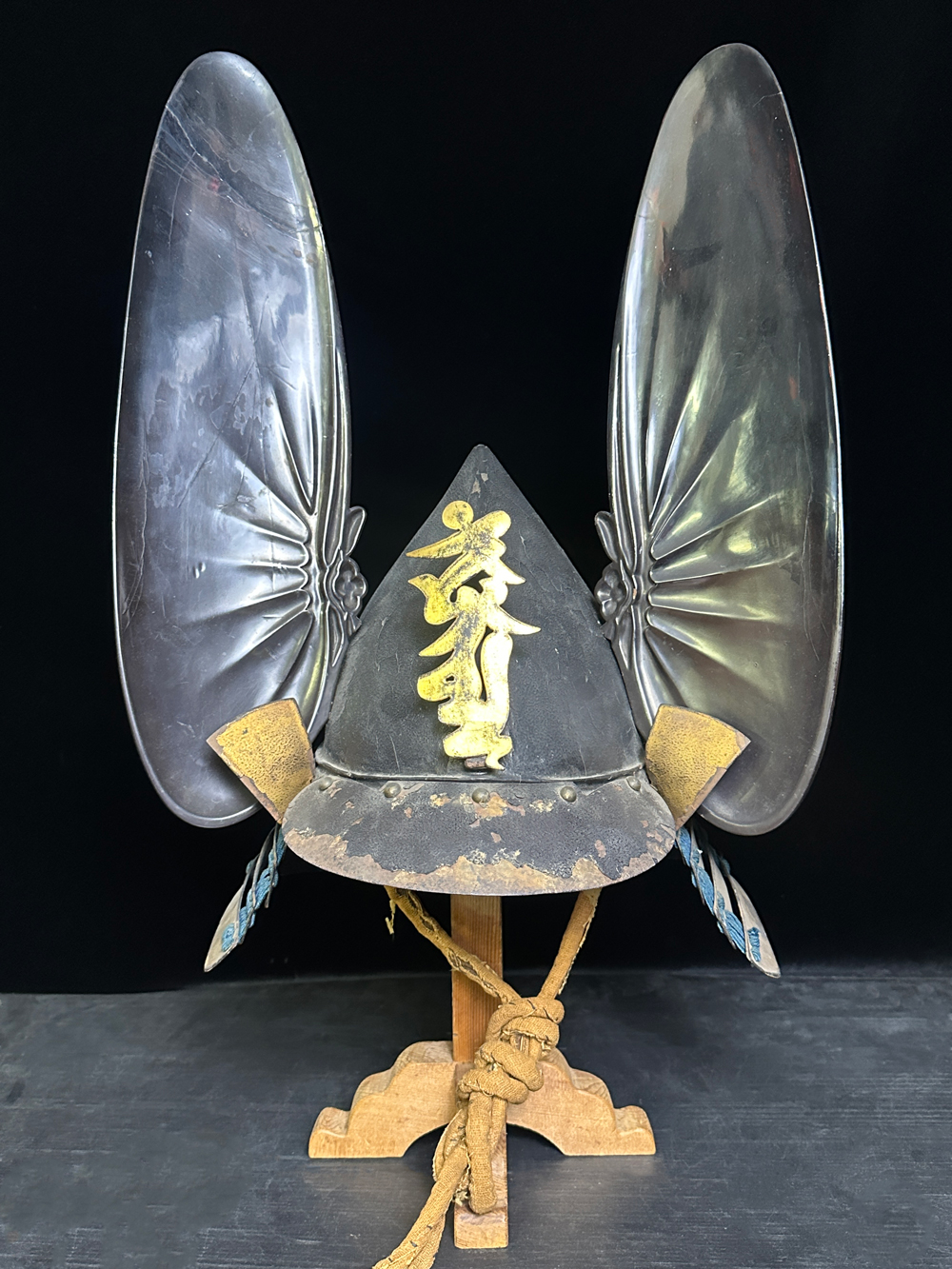
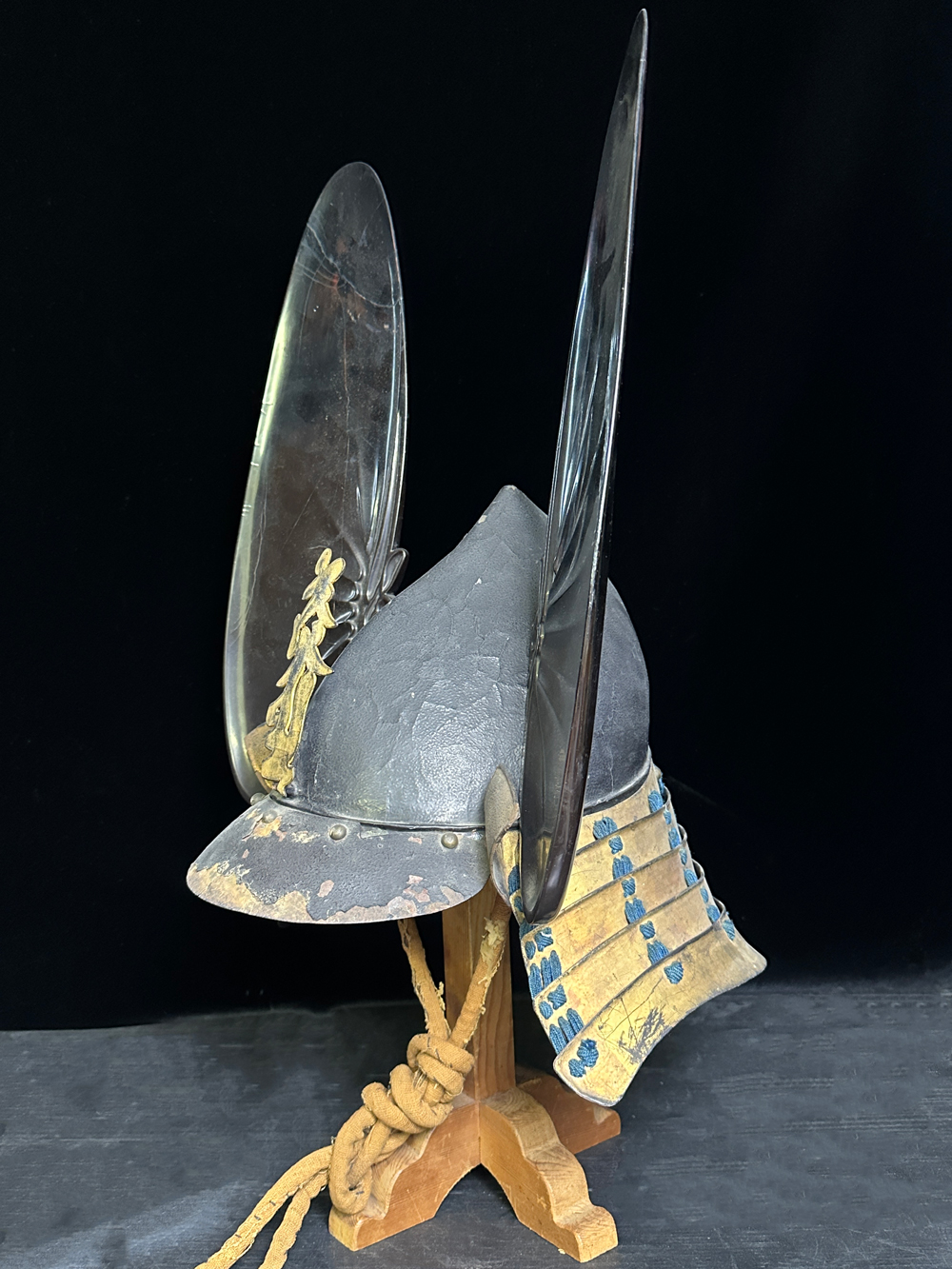
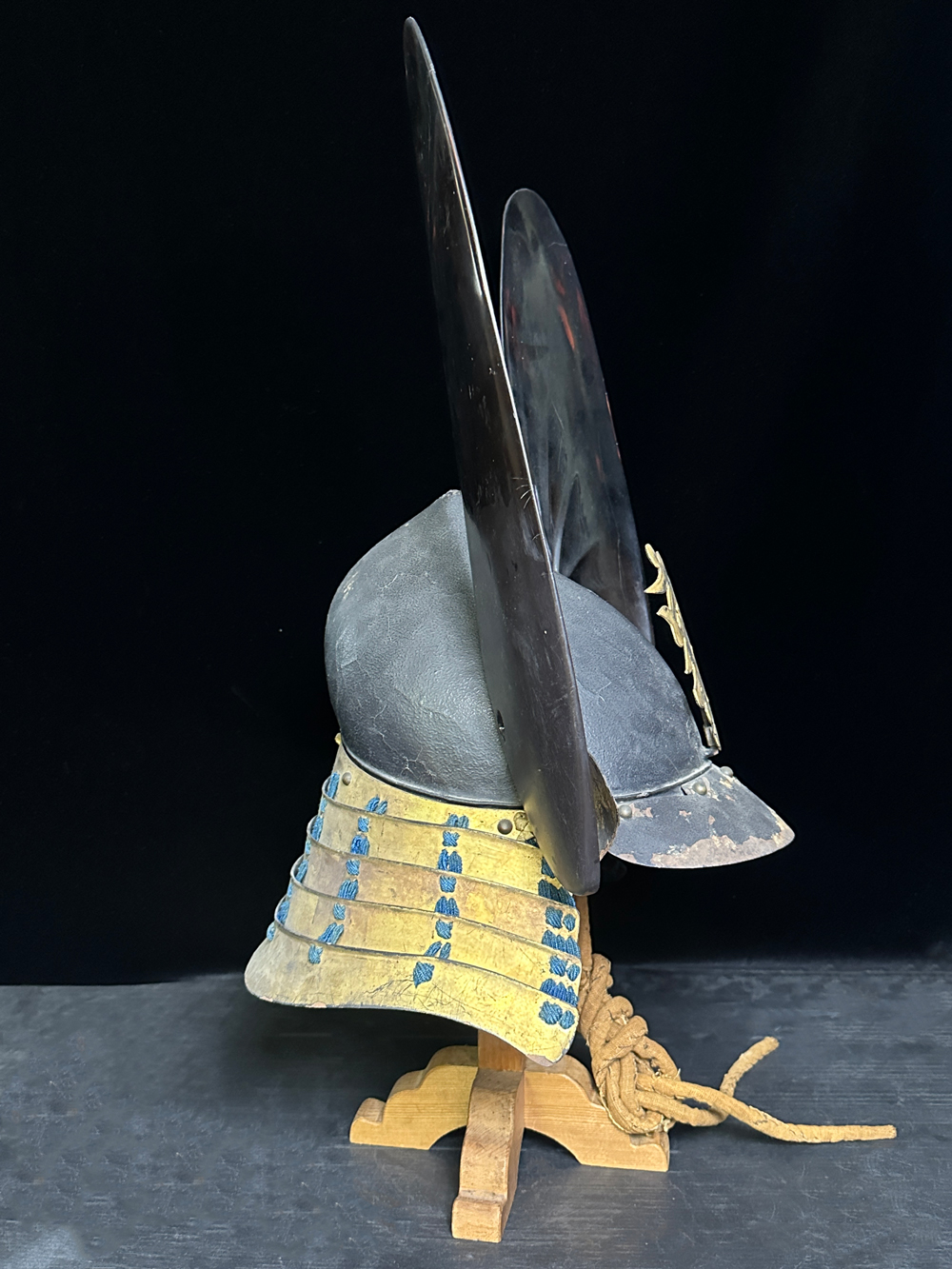
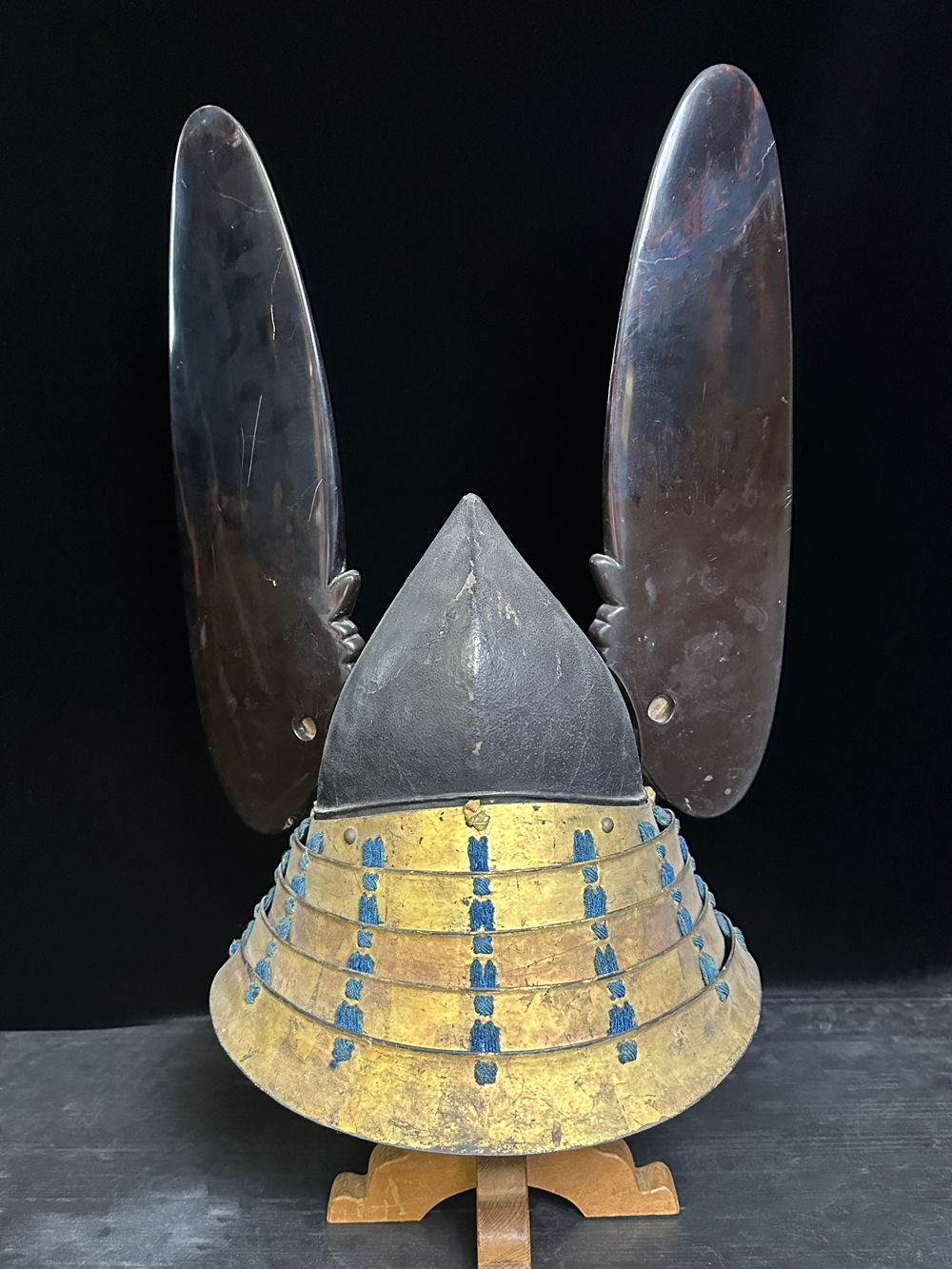
Rabbit-Ear Kawari Kabuto
(兎耳脇立変わり兜)
| Item NO. | No.m0220 | Price | Please contact us. |
|---|---|---|---|
| Period | Azuchi-Momoyama Period (Late 16th – Early 17th Century) | ||
| Kabuto | Rabbit-Ear Kawari Kabuto | ||
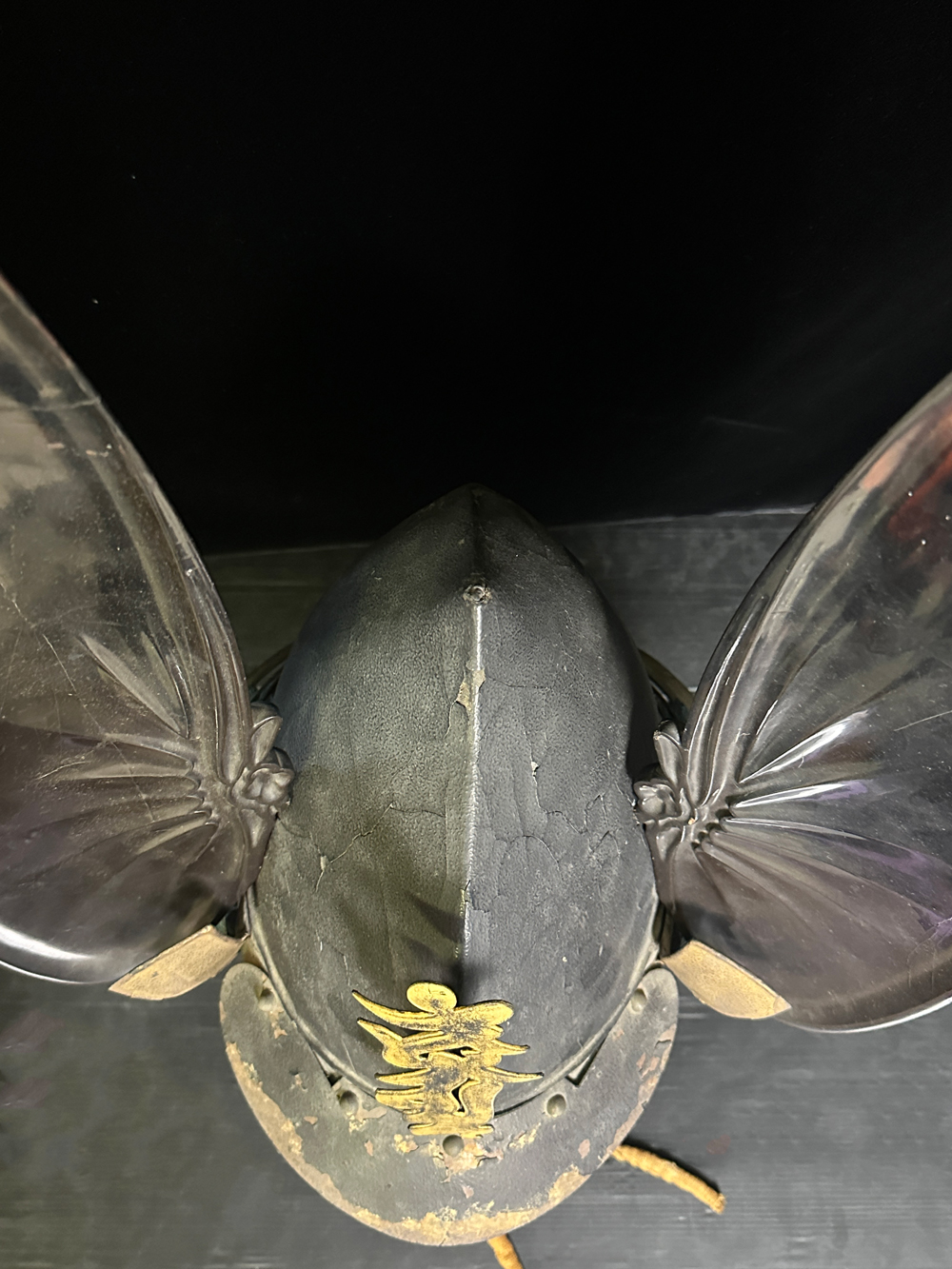
| Maetate | character front | ||
| Details | This distinctive and striking kabuto features wakidate (side ornaments) designed to resemble the large ears of a rabbit. Rabbits are known for their large ears, which allow them to quickly detect their surroundings, and for their remarkable speed and agility. They are also particularly skilled at running uphill, and have long been regarded in Japan as auspicious animals symbolizing good fortune, progress, and rising prosperity. For samurai warriors, the ability to anticipate enemy movements and move swiftly across the battlefield was essential. The rabbit-ear wakidate may have been intended to embody these qualities, expressing wishes for victory in battle, good fortune, and advancement in status. The prominently extended rabbit ears not only made the wearer stand out on the battlefield but also served as a distinctive expression of the warrior's individuality and aesthetic sensibility. |
||
CONTACT
SEARCH
-
PERIOD LISTS
Koto|Shinto|Shinshinto|GendaitoPRICE LISTS
~¥500,000 JPY|¥510,000 JPY~¥1,000,000 JPY|¥1,010,000 JPY~¥2,000,000 JPY|¥2,010,000 JPY~¥3,000,000 JPY| ¥3,010,000 JPY~¥4,000,000 JPY|¥4,010,000 JPY~¥5,000,000 JPY|¥5,010,000 JPY~¥10,000,000 JPY|¥10,010,000 JPY~ |Please contact us -
PAPER LISTS
Important art appraisal|Others|No appraisalJpanese Swords
NBTHK Tokubetsu Jyuyo|NBTHK Jyuyo|NBTHK Tokubetsu Hozon|NBTHK HozonFittings
NBTHK Tokubetsu Jyuyo|NBTHK Jyuyo|NBTHK Tokubetsu Hozon|NBTHK Hozon