
Listed in Hizen Swords and Tsuba

Wakizashi
Iyo no Jō Minamoto Munetsugu
Kirimono Fujiwara Yoshinaga
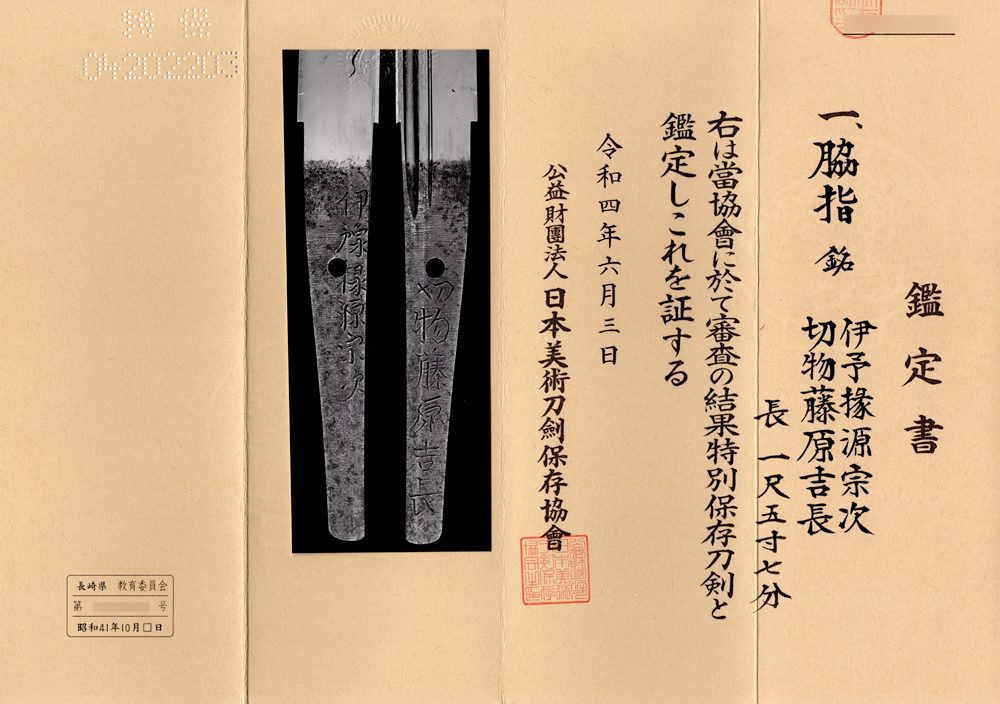
脇指
伊予掾藤原宗次
切物藤原吉長
| Item NO. | No,K00261 | Price | Please contact us. |
|---|---|---|---|
| Paper | NBTHK Tokubetsu Hozon Paper (公財)日本美術刀剣保存協会 特別保存刀剣鑑定書 | ||
| Country | Hizen Province | ||
| Period | Early Edo period | ||
| Blade Length | 47.6cm | ||
| Curve(Sori) | 0.6cm | ||
| Top Width (Sakihaba) | 2.2cm | ||
| Bottom Width (Motohaba) | 2.3cm | ||
| Bottom Thickness (Motokasane) | 0.6cm | ||
| Top Thickness (Sakikasane) | 0.5cm | ||
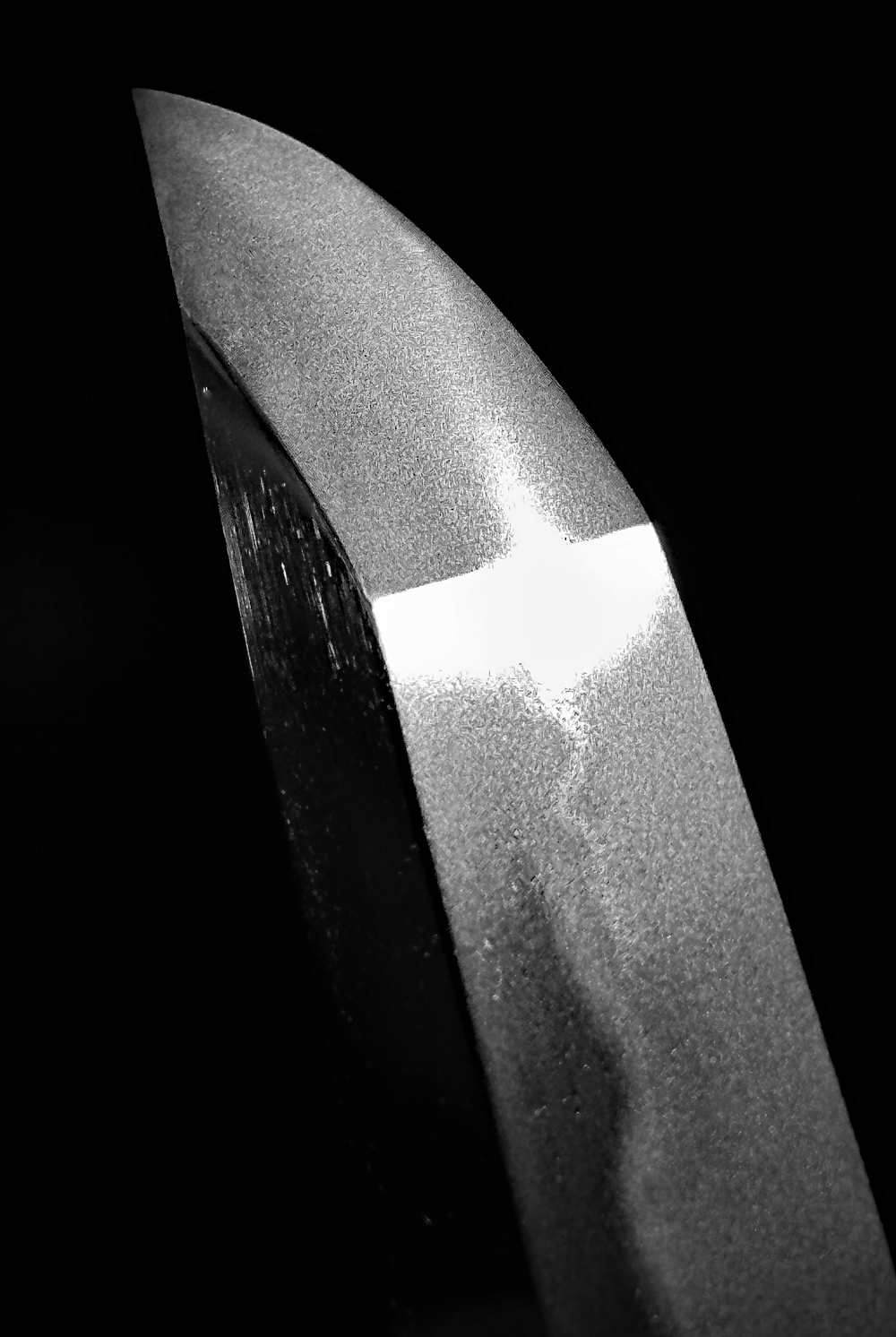
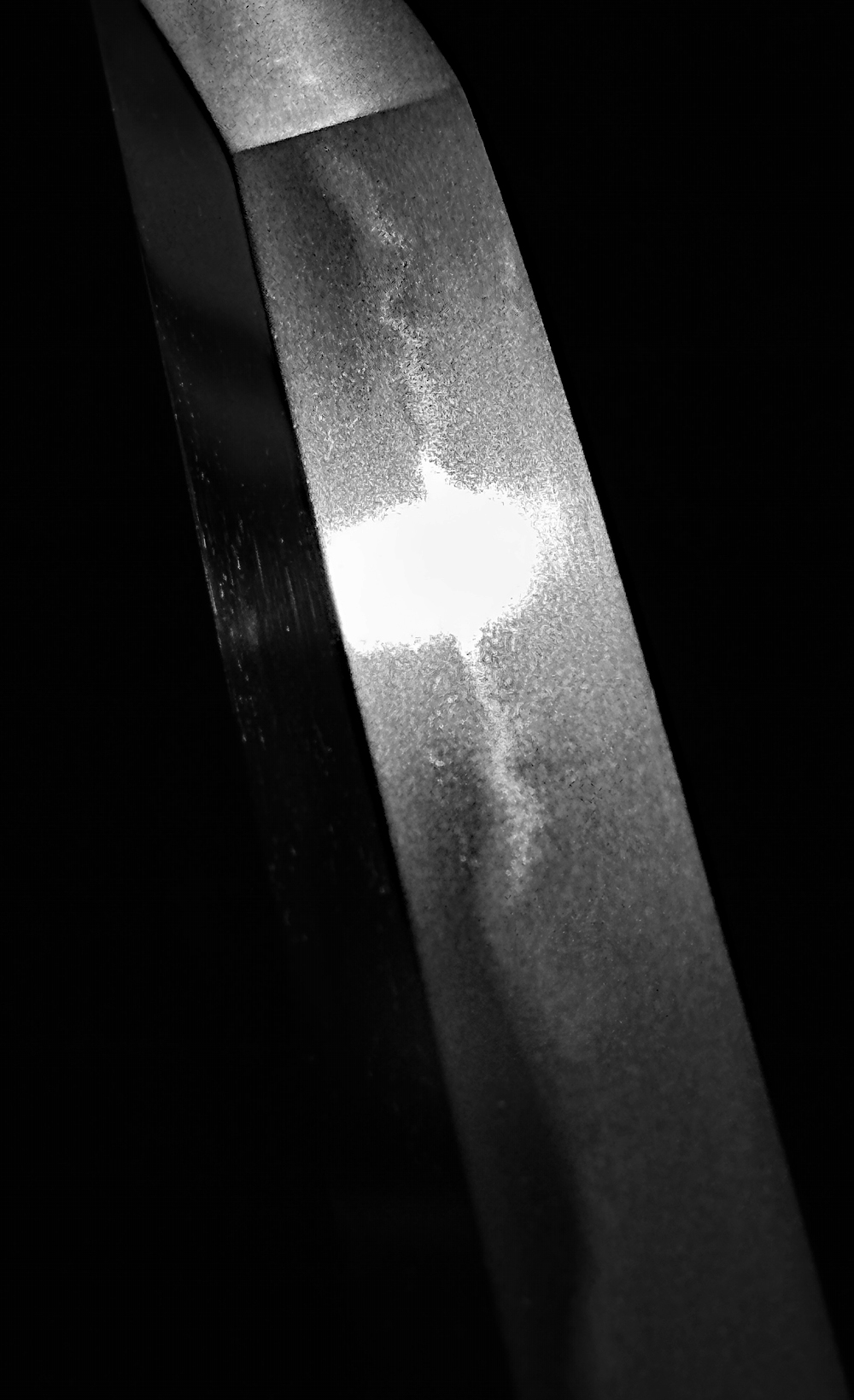
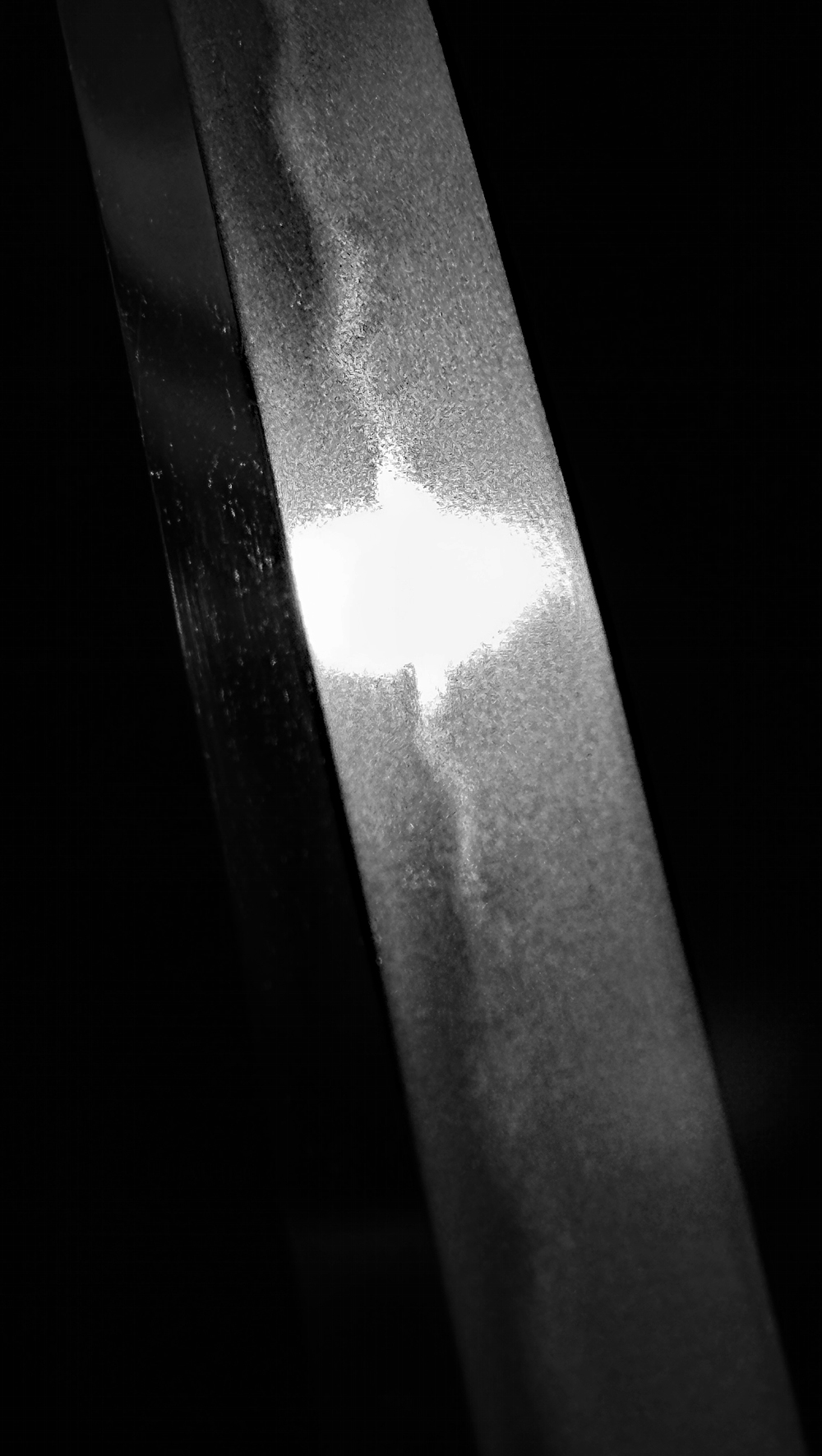
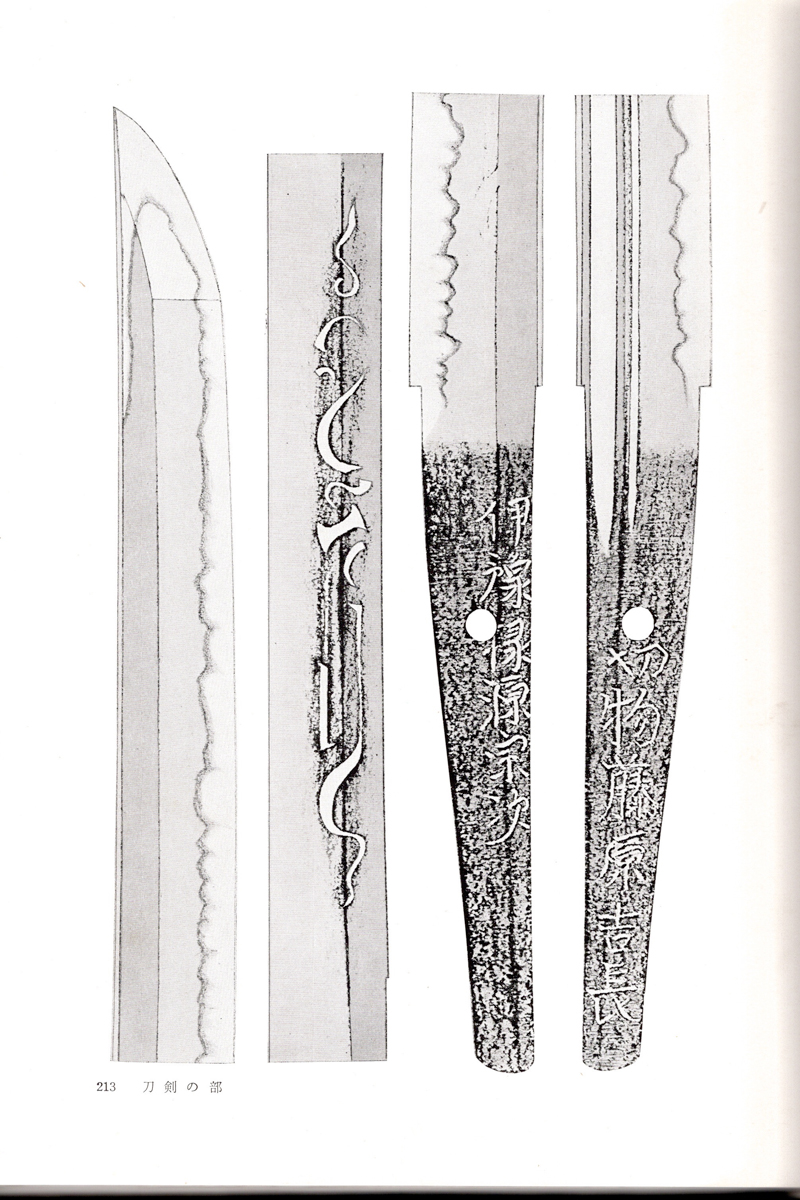
| Keijo | Constructed in shinogi-zukuri with an iori-mune, of standard width (mihaba jinjō), with graceful curvature (sori tsuku), and a medium-sized point (chū-kissaki). | ||
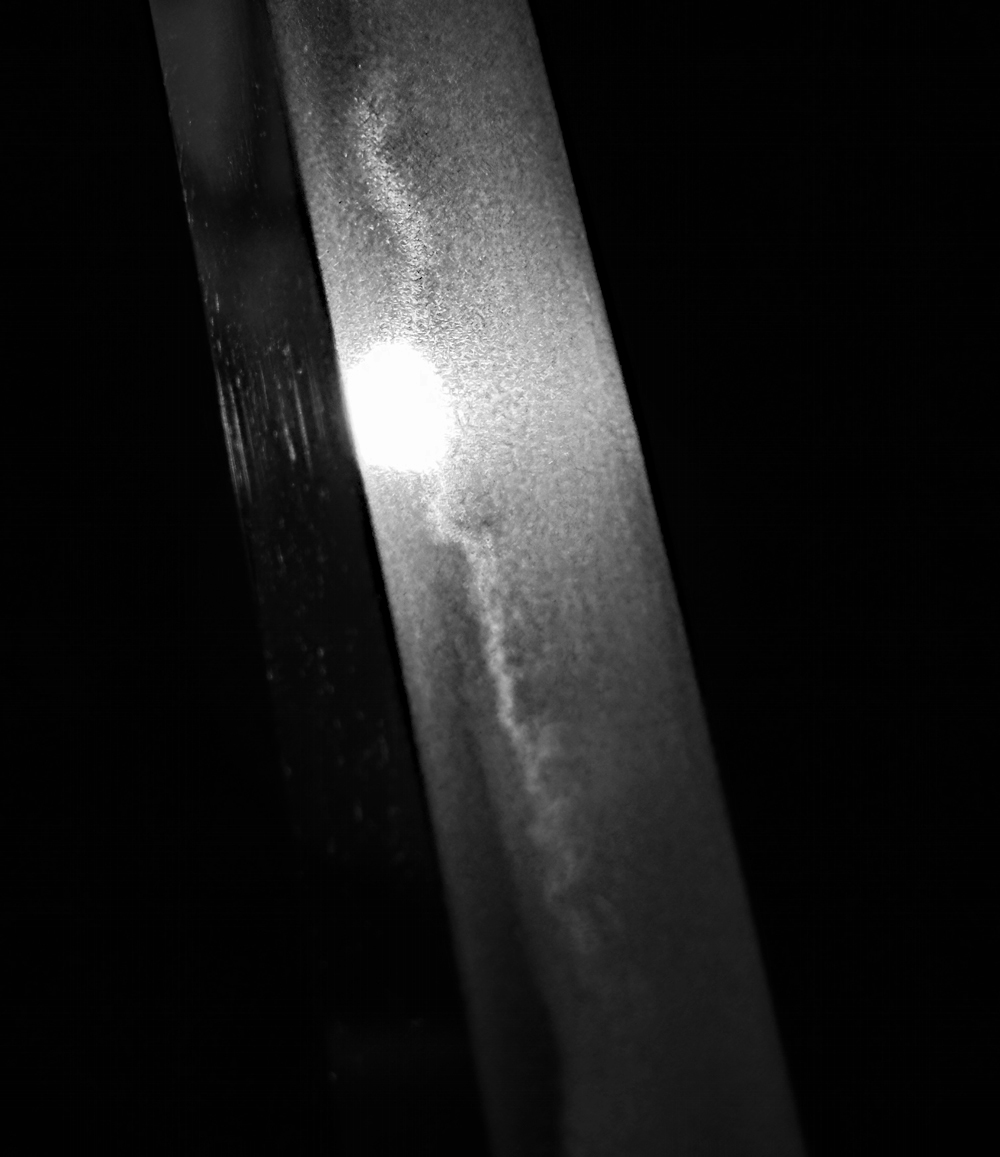
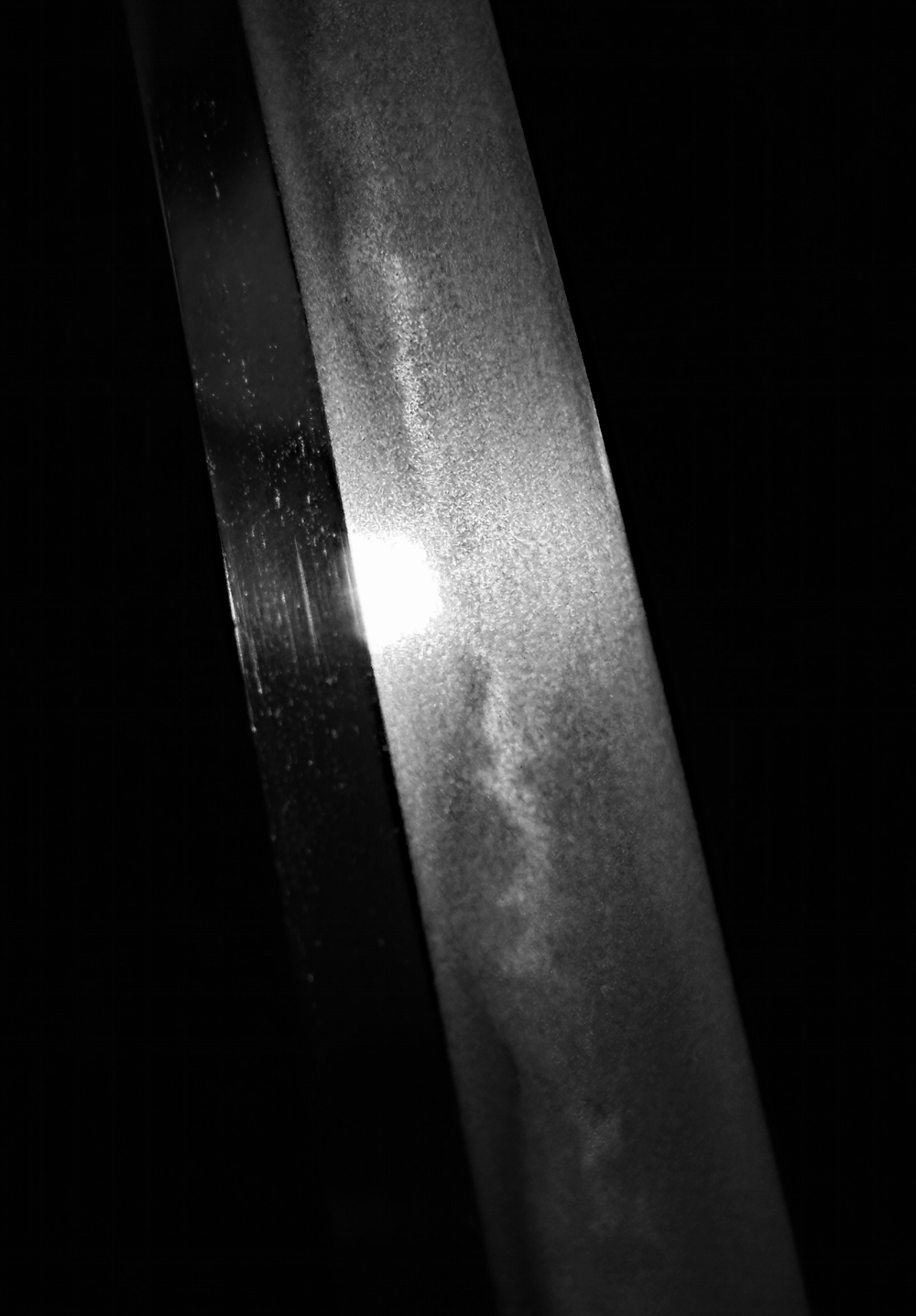
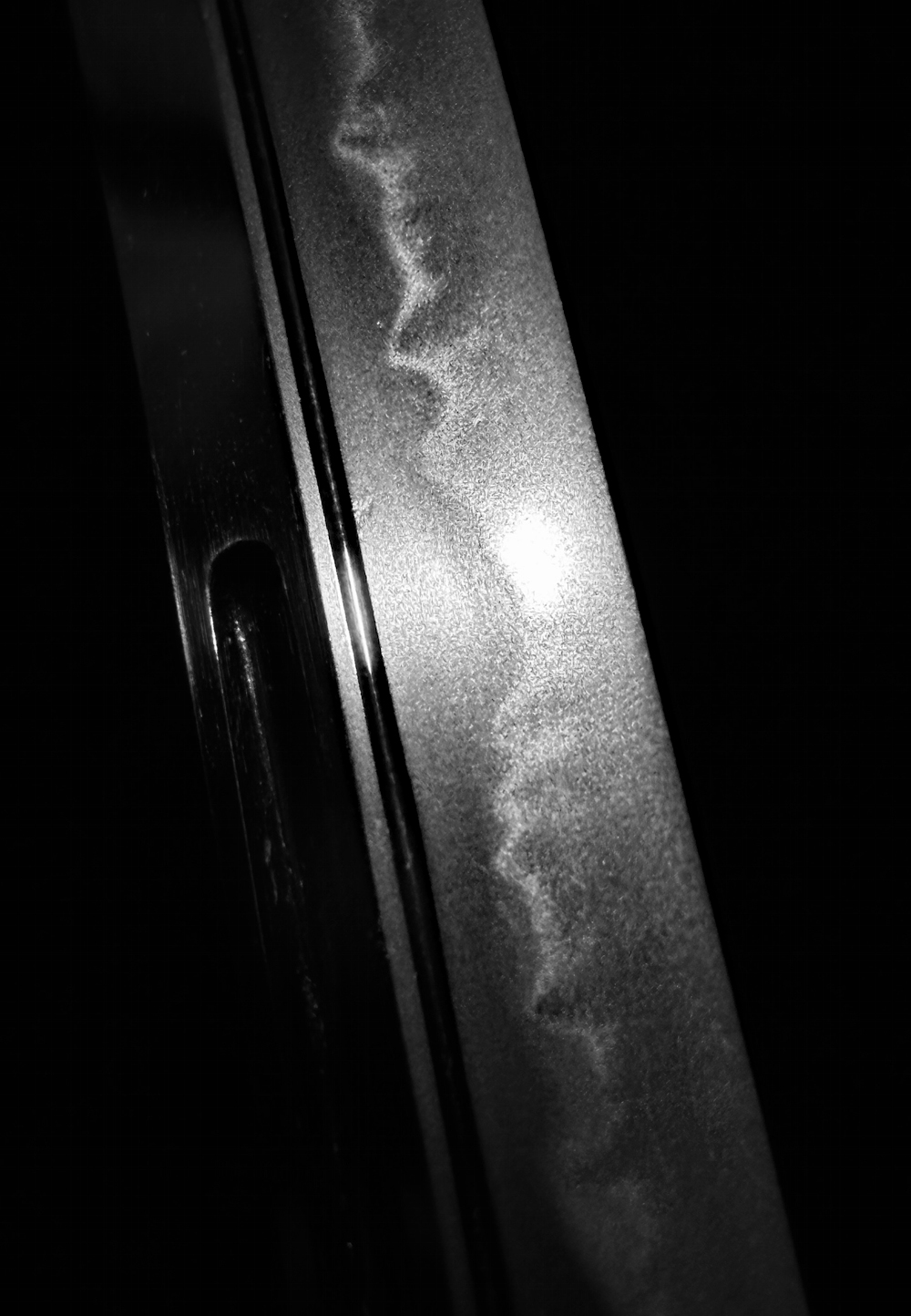
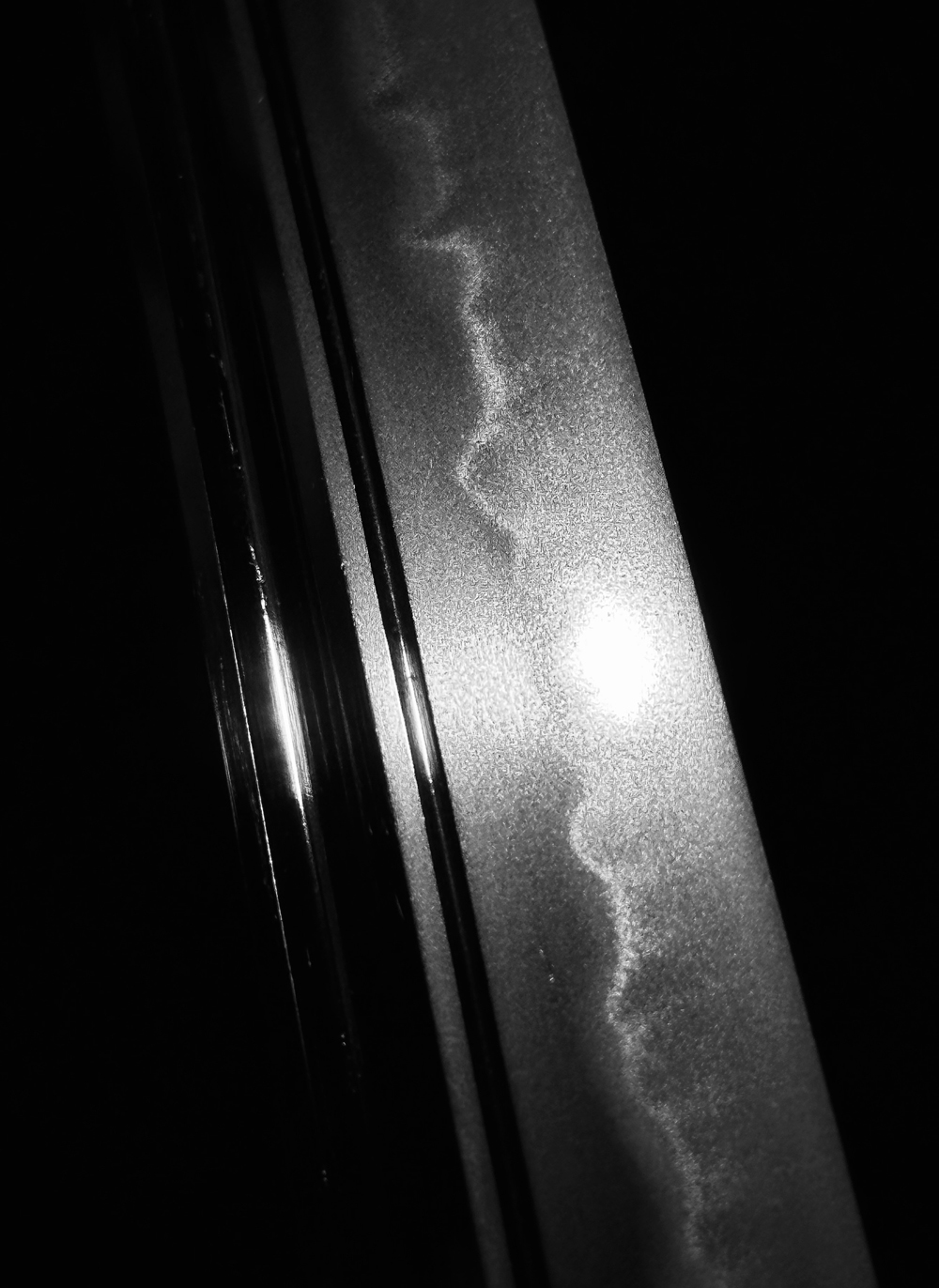
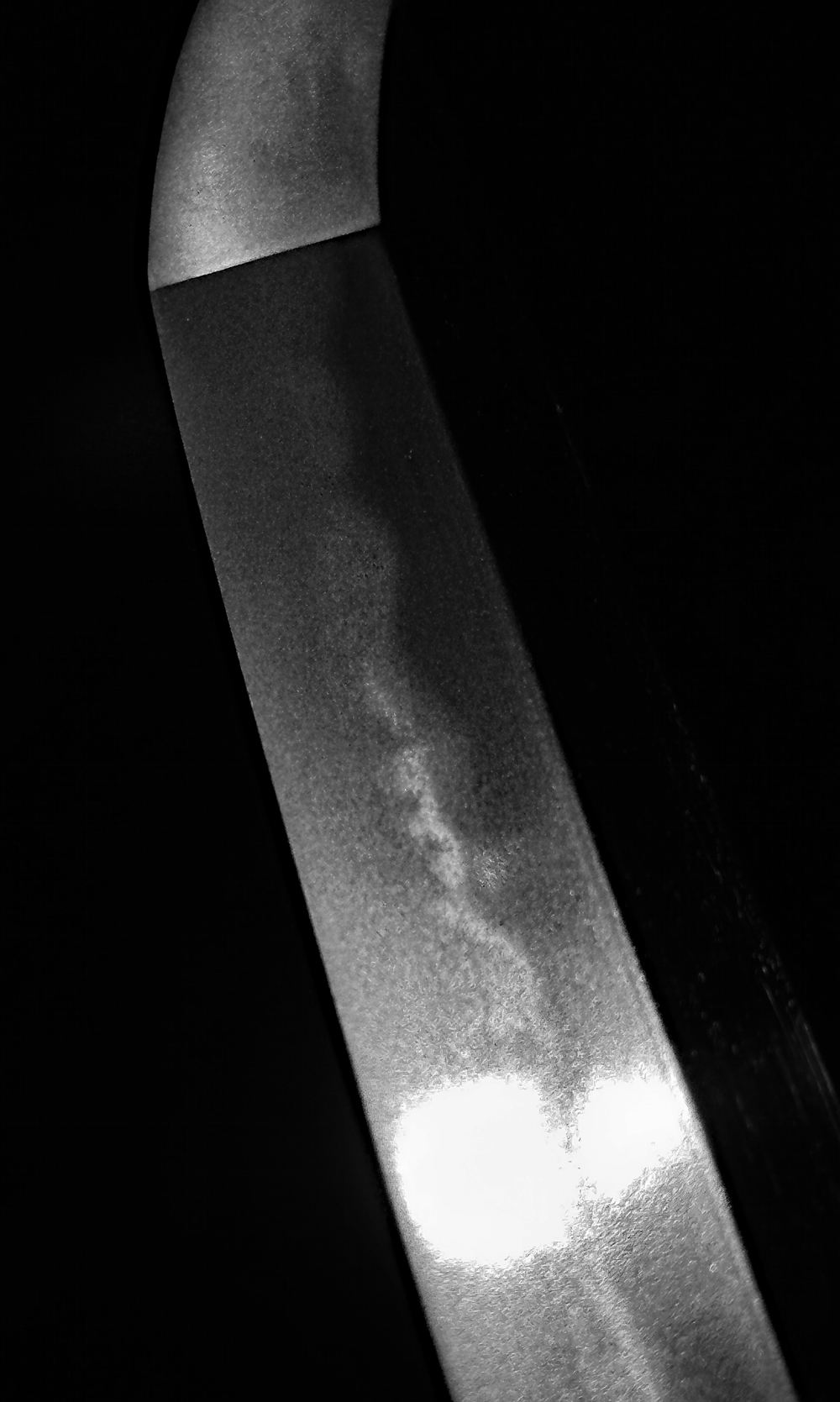
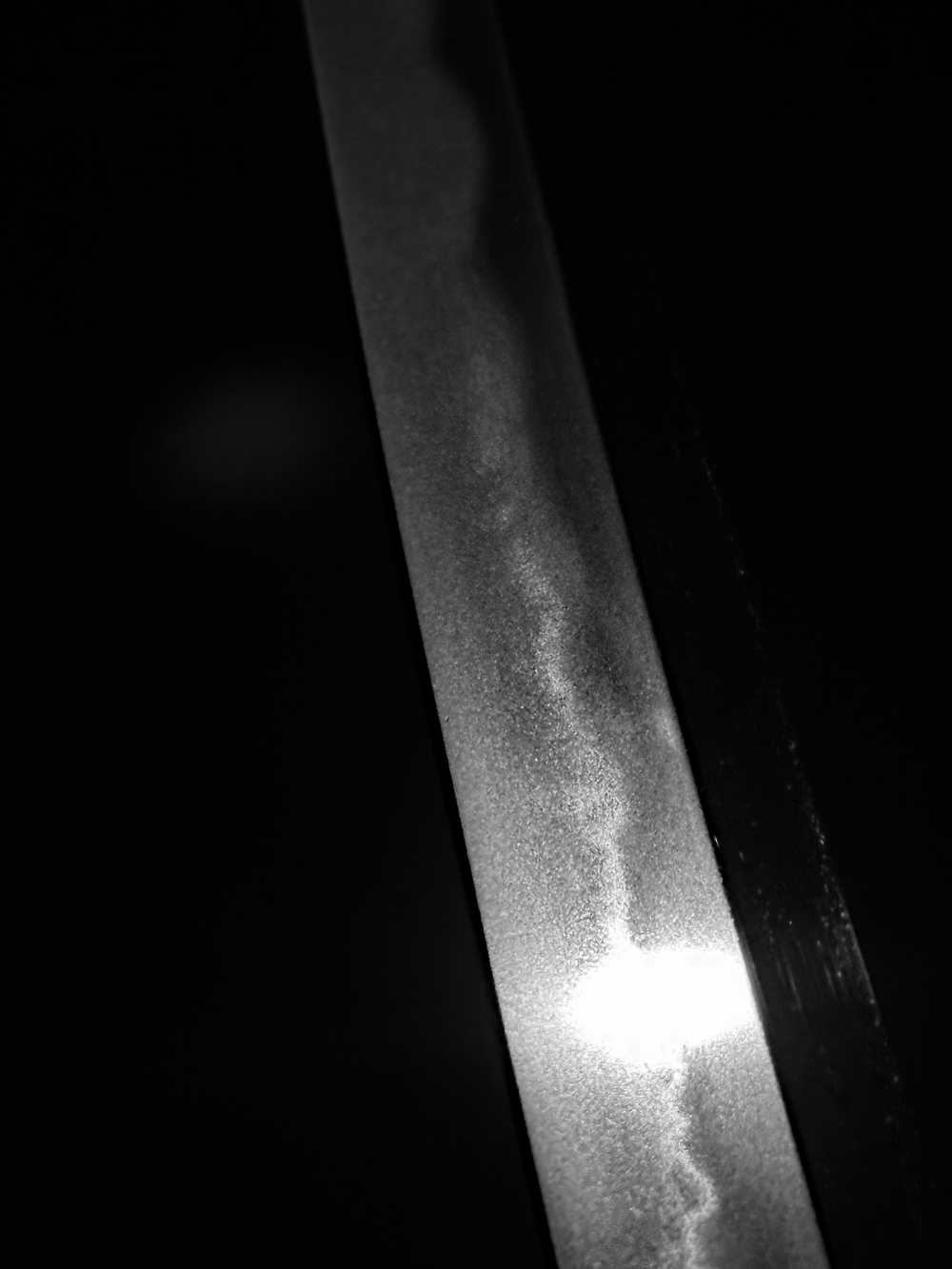
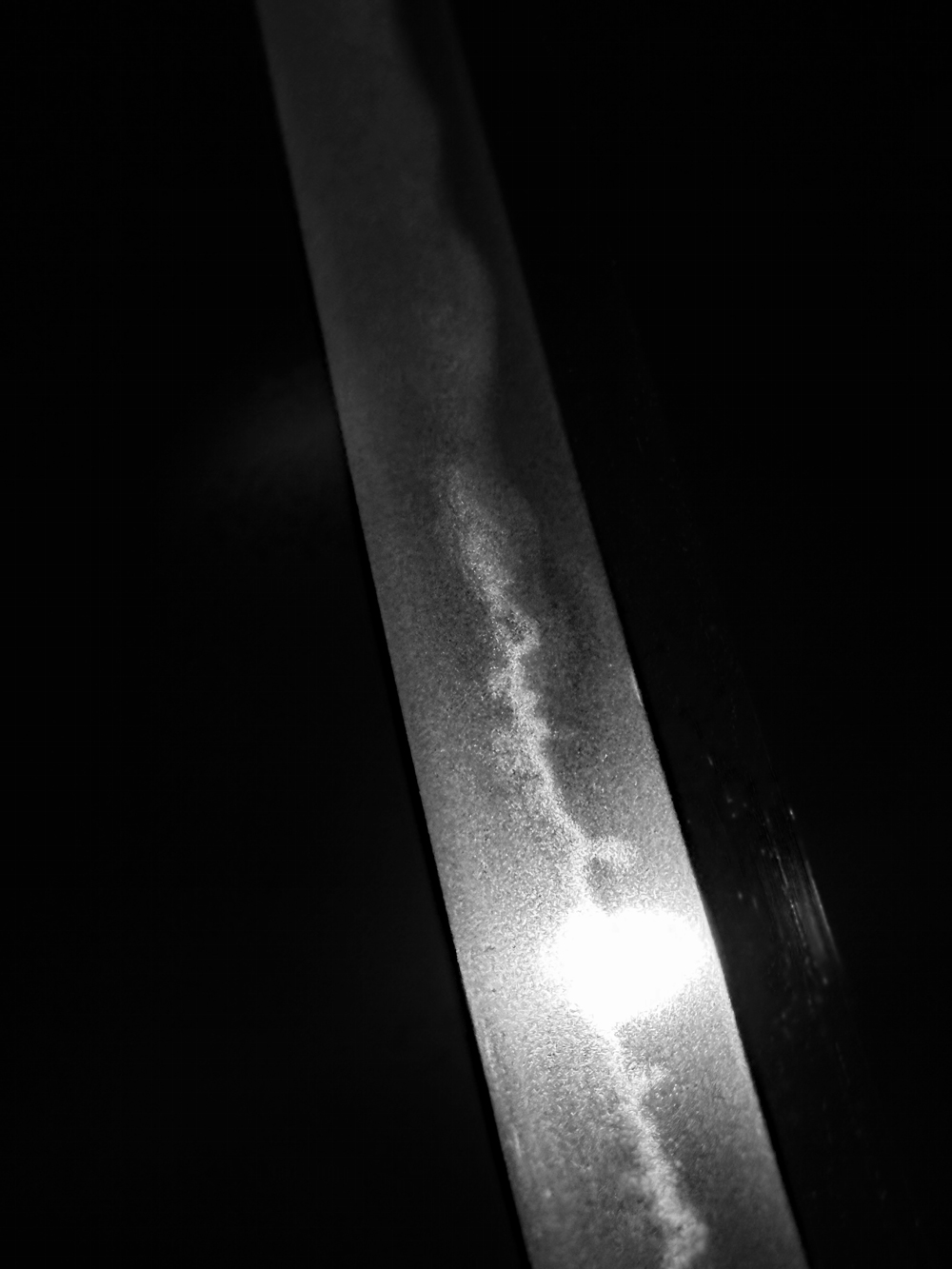
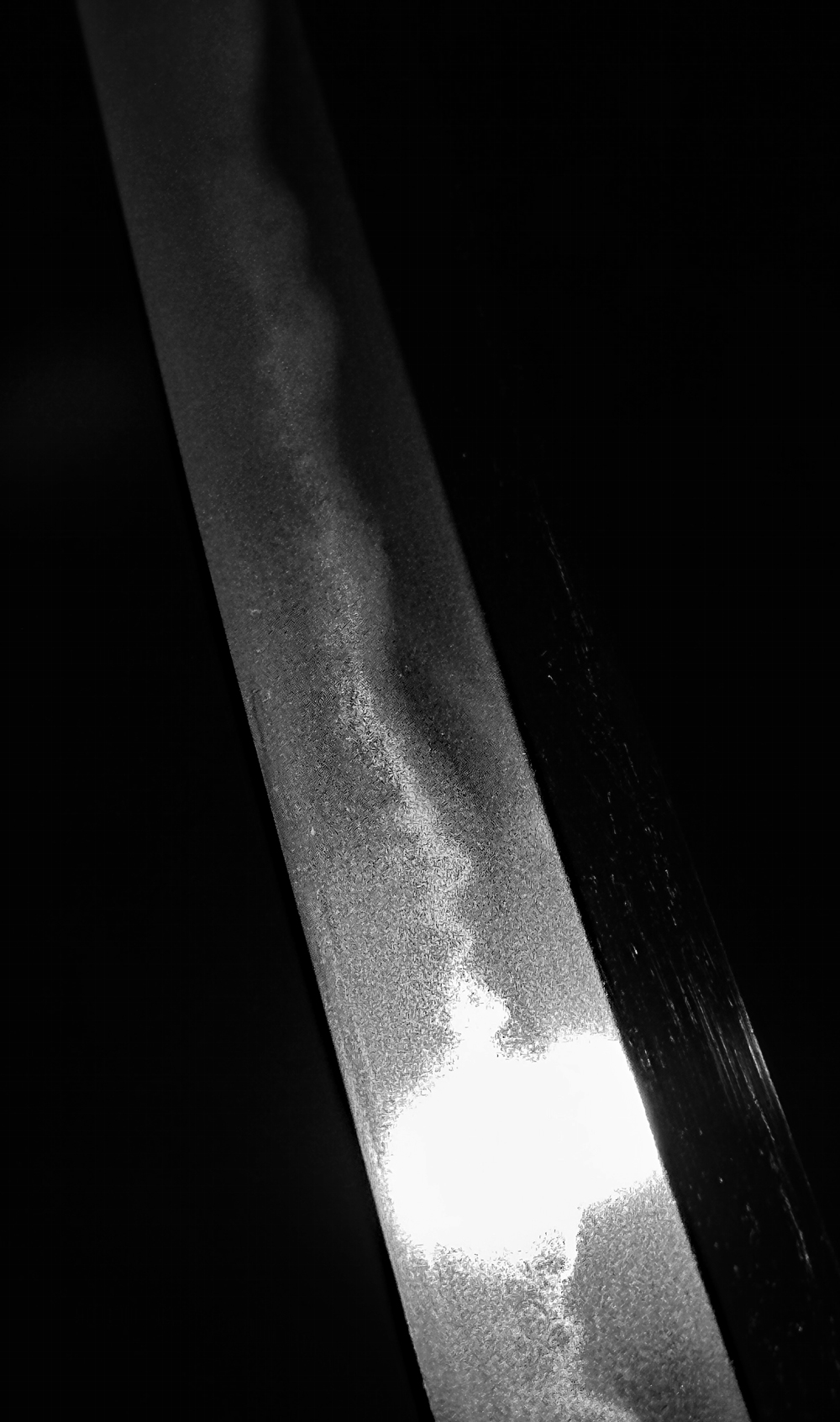
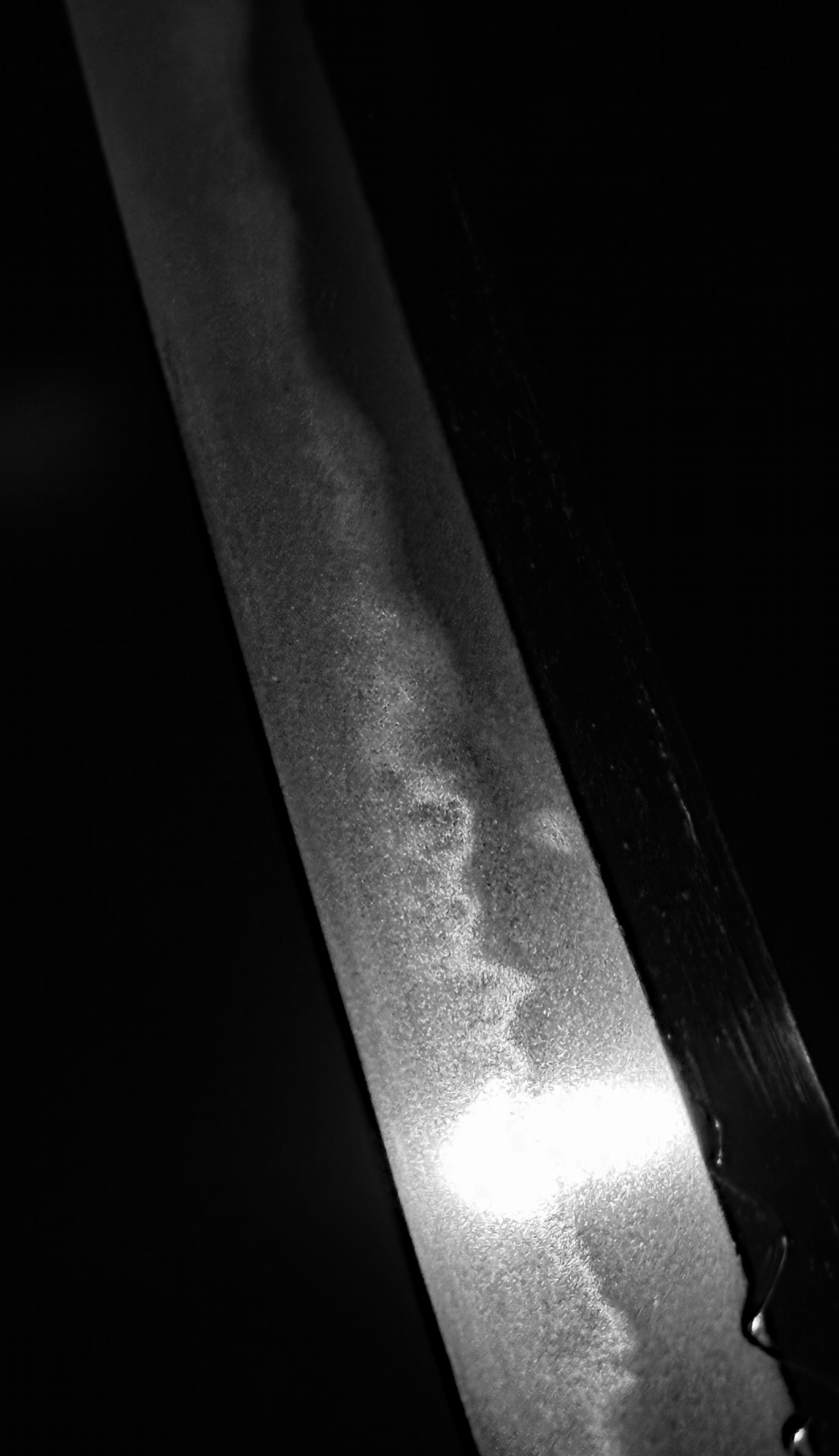
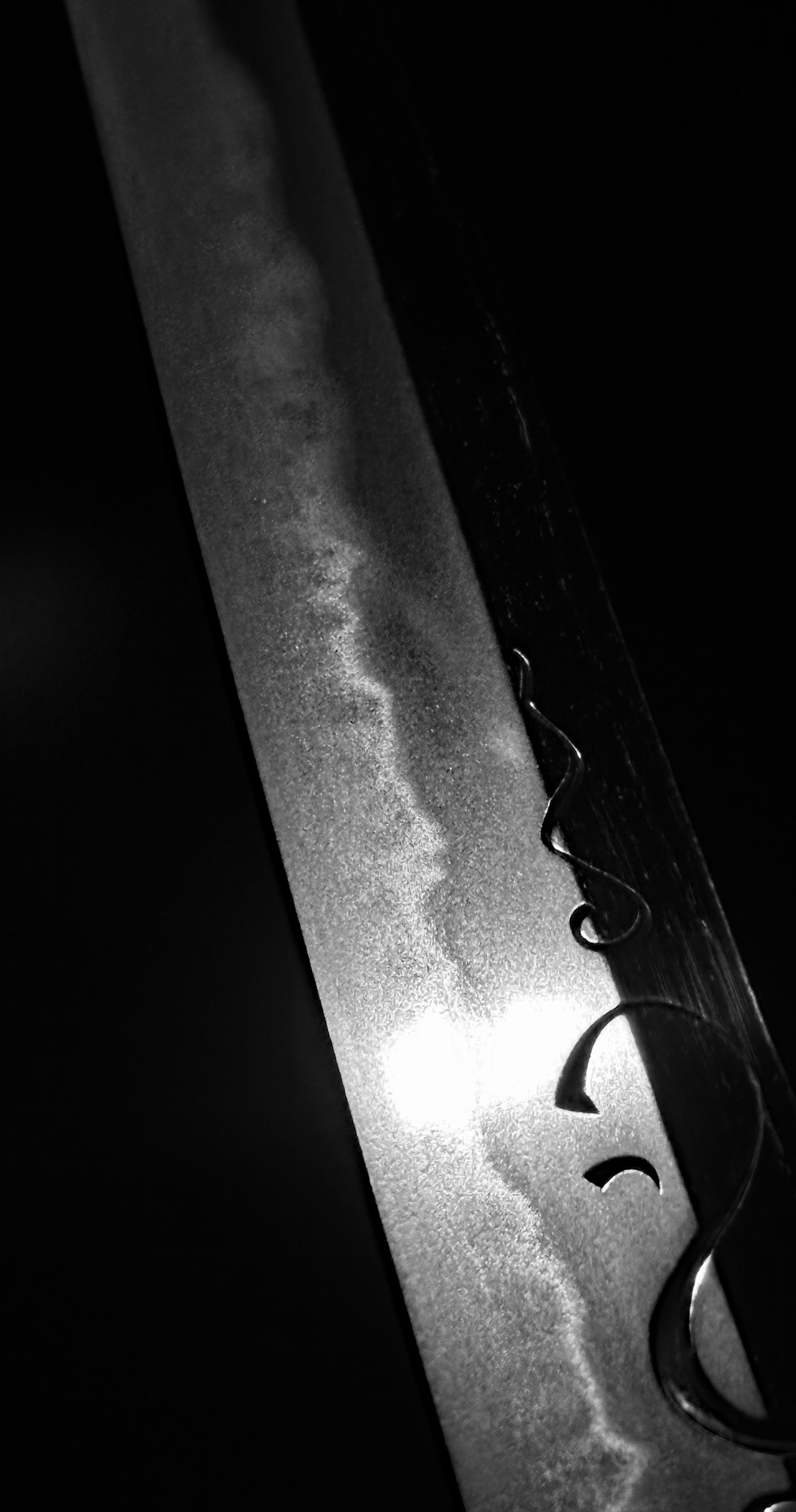
| Kitae | The jihada is predominantly itame mixed with mokume, with a thick covering of ji-nie. | ||
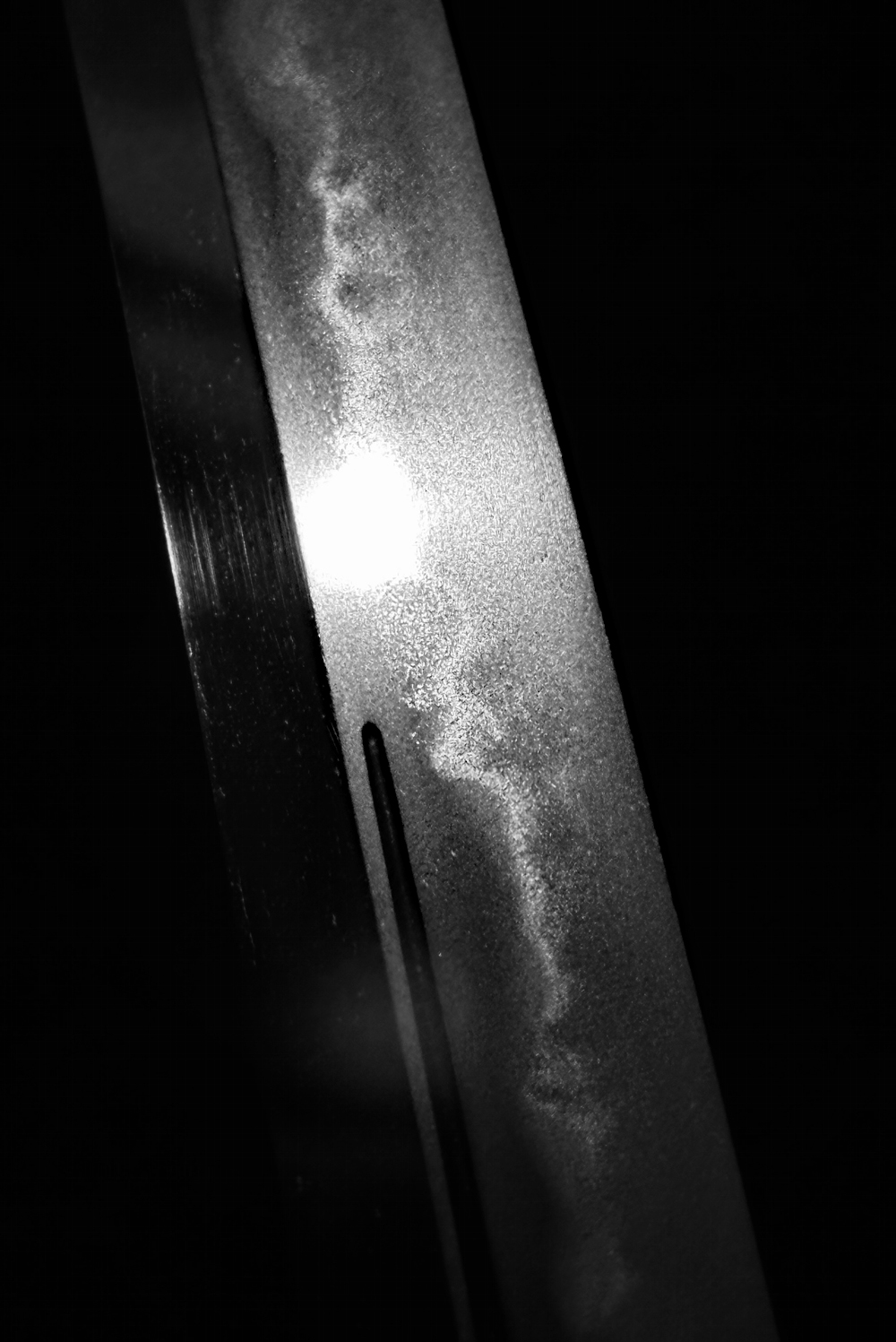
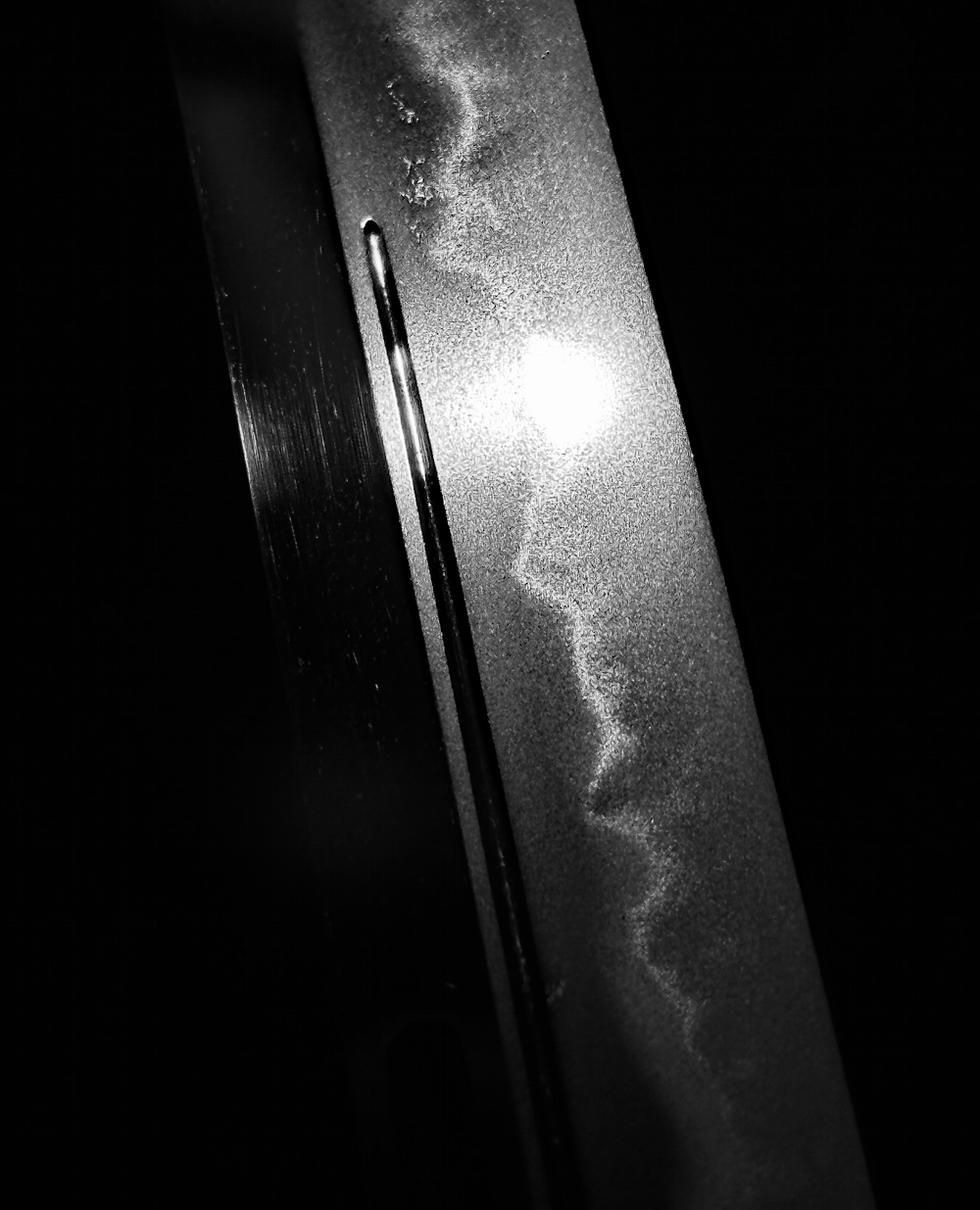
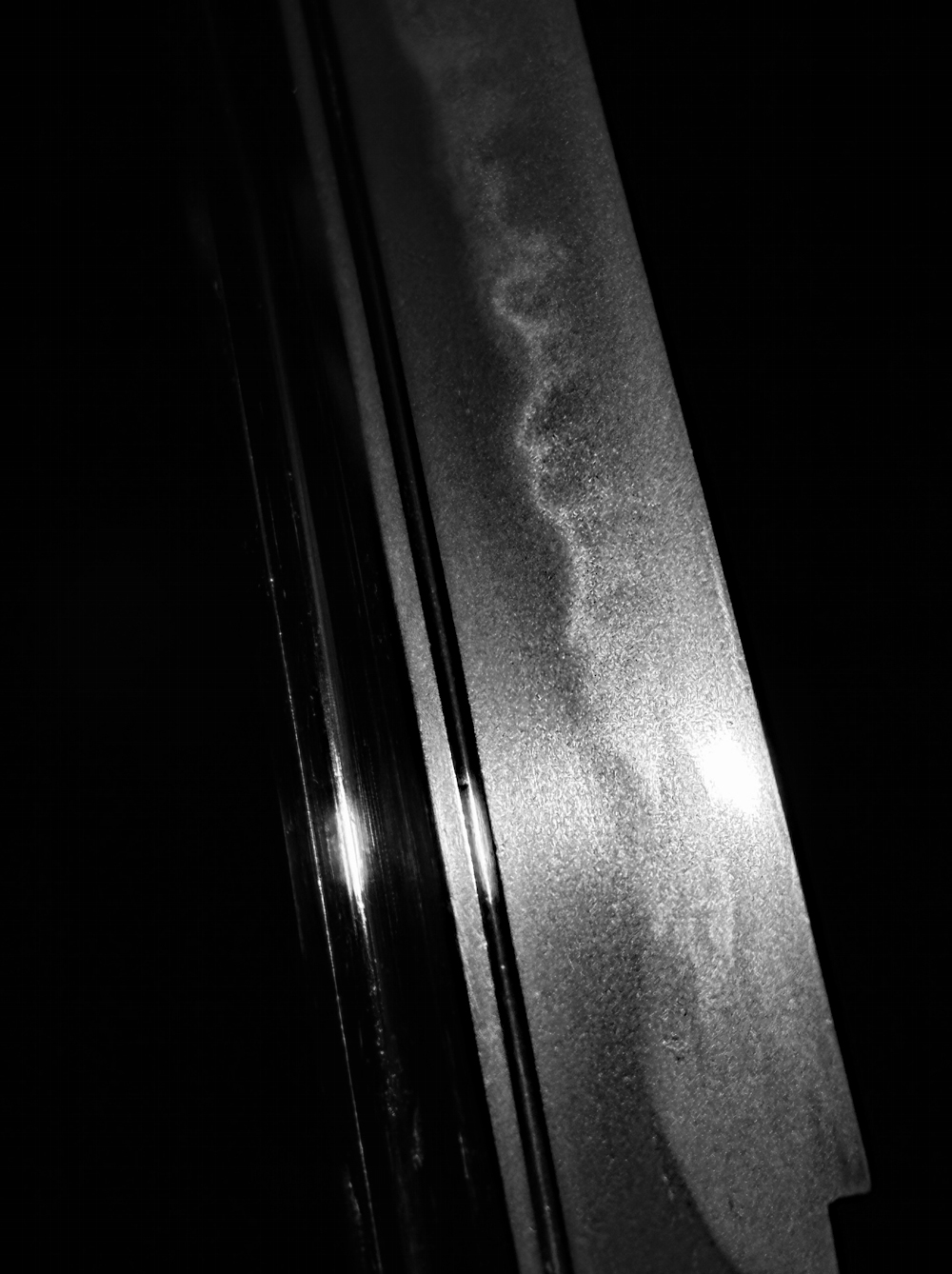
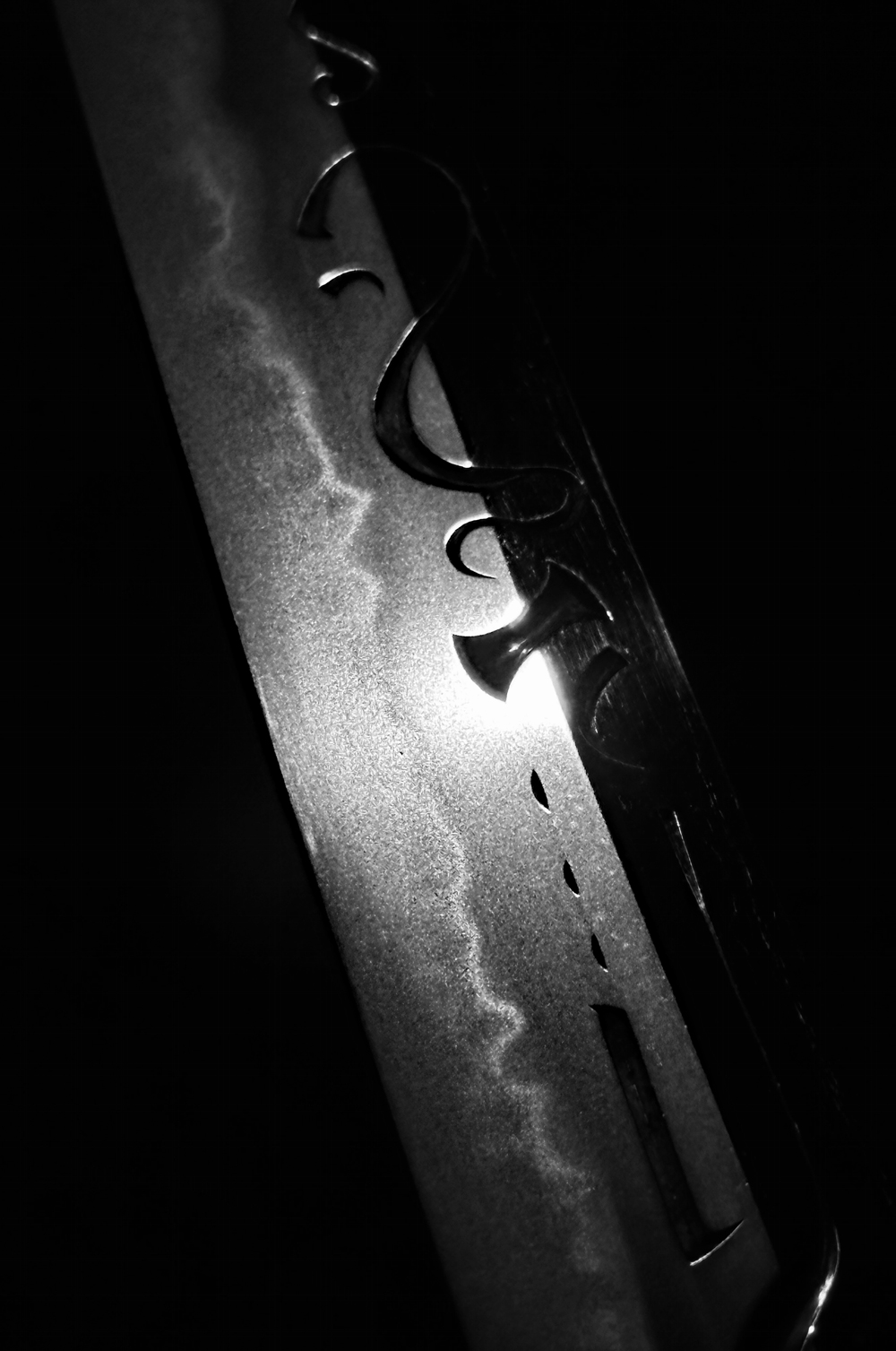
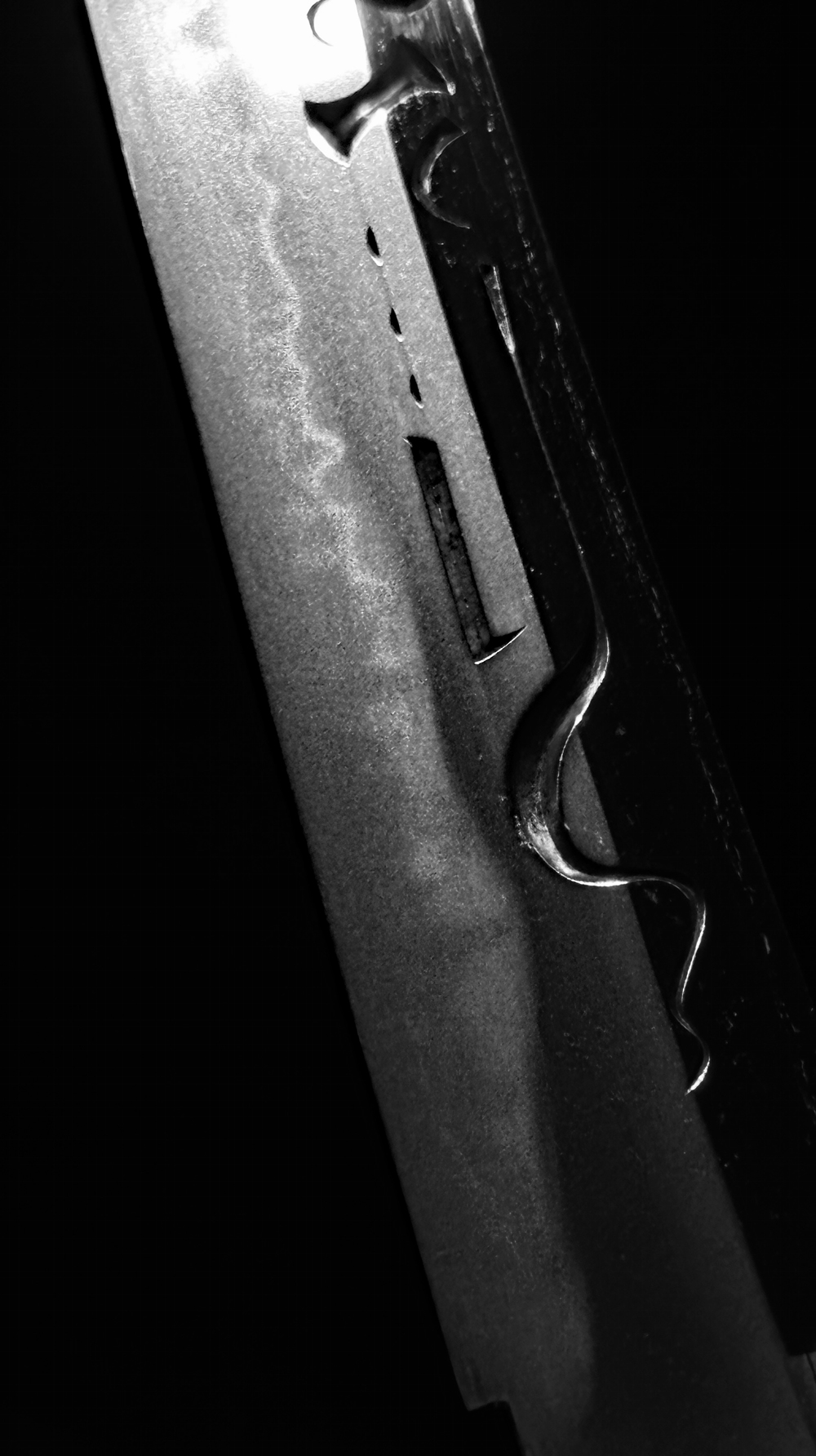
| Hamon | The hamon is an irregular midare pattern incorporating gunome and ko-chōji, with sunagashi running through the temper line and covered in a thick layer of fine ko-nie. | ||
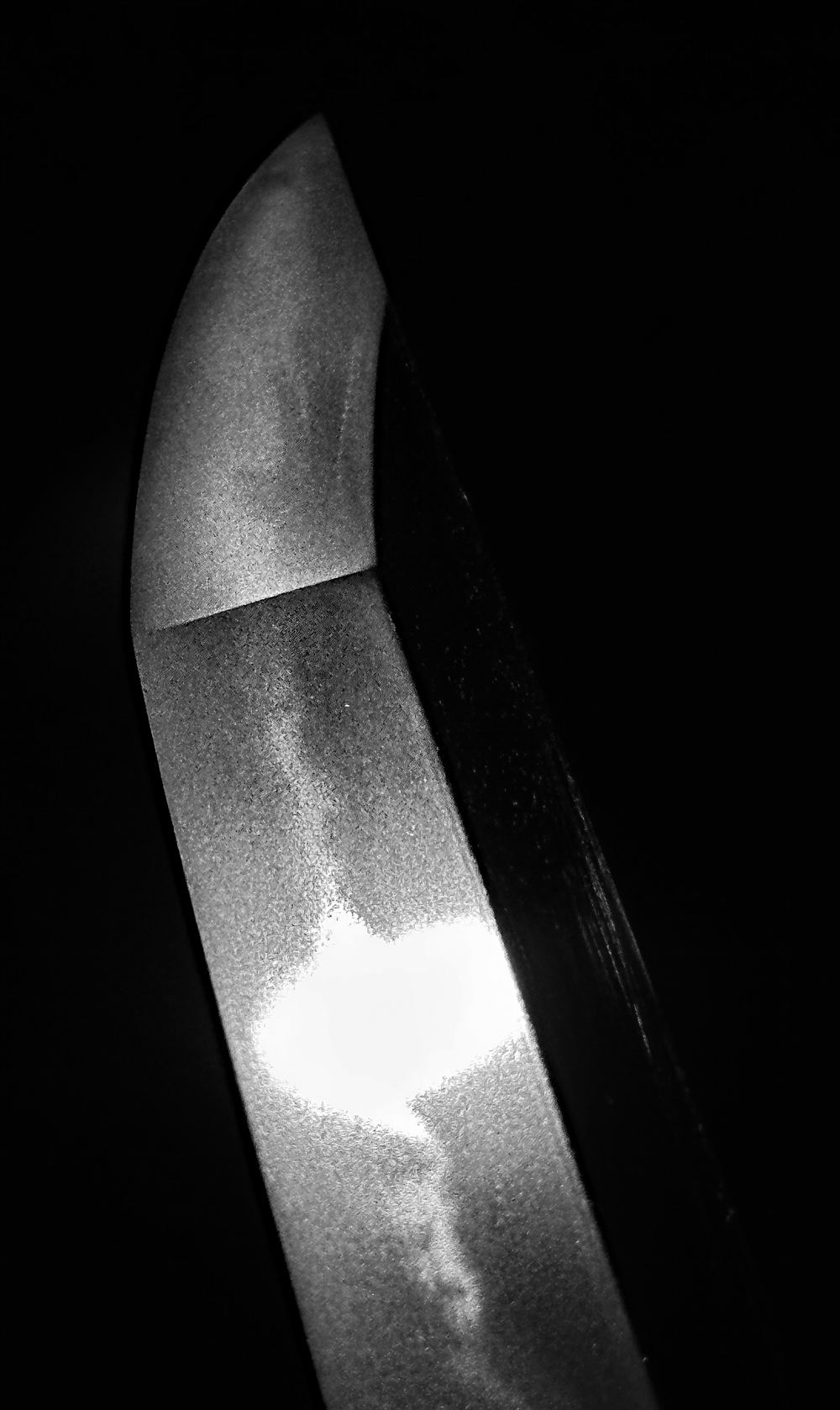
| Boushi | Front (omote): The bōshi becomes irregular (midare-komi) and turns back in a komaru. Back (ura): The bōshi turns back directly in a komaru. | ||
| Hori | The omote is carved with a Sō-Kurikara dragon, while the ura is carved with a koshi-hi accompanied by a soe-hi. | ||
| Nakago | The nakago is ubu, with a kurijiri tip of saki-ha-agari shape, katte-sagari file marks, and one mekugi-ana. | ||
| Details | priest's family in Nagase Village. He is believed to have forged swords first in the castle town of Saga before later moving to Isahaya. According to historical records, he received the title Iyo no Jō in Keichō 11 (1606), a date supported by extant signed works bearing the Keichō 12 (1607) inscription. Among Hizen swordsmiths, Munetsugu's workmanship is particularly distinctive, reflecting a strong influence from the Sōshū tradition, especially the style of Shizu. His blades feature a well-developed nie structure with vigorous irregular midare tempering incorporating pointed elements, together with abundant kinsuji and sunagashi activities. Unlike the typical Hizen boshi, which is generally finished in a straight komaru, his boshi is characteristically irregular. The tang is also shaped in a tanagobara-style form inspired by the Sōshū tradition, and his distinctive signature on the omote side is one of his identifying characteristics. The carvings on this wakizashi were executed by Yoshinaga, featuring a Sō Kurikara dragon on the omote and a koshi-hi with a soe-hi on the ura. These carvings further enhance the sword's artistic and documentary significance. |
||

CONTACT
SEARCH
-
PERIOD LISTS
Koto|Shinto|Shinshinto|GendaitoPRICE LISTS
~¥500,000 JPY|¥510,000 JPY~¥1,000,000 JPY|¥1,010,000 JPY~¥2,000,000 JPY|¥2,010,000 JPY~¥3,000,000 JPY| ¥3,010,000 JPY~¥4,000,000 JPY|¥4,010,000 JPY~¥5,000,000 JPY|¥5,010,000 JPY~¥10,000,000 JPY|¥10,010,000 JPY~ |Please contact us -
PAPER LISTS
Important art appraisal|Others|No appraisalJpanese Swords
NBTHK Tokubetsu Jyuyo|NBTHK Jyuyo|NBTHK Tokubetsu Hozon|NBTHK HozonFittings
NBTHK Tokubetsu Jyuyo|NBTHK Jyuyo|NBTHK Tokubetsu Hozon|NBTHK Hozon